Showing posts with label Paris. Show all posts

Thursday, 14 July 2011

Postcards of Paris


Notre Dame de Paris


                               Sacre Coeur                          Stairway to Sacre Coeur

View over Paris from Sacre Coeur

Carousel and Sacre Coeur

Le Musee de Louvre


Les Halles

La Tour Eiffel

Les Galleries Lafayette

Le Moulin Rouge

View towards Sacre Coeur from Le Musee d'Orsay

Le Metropolitain

Stairway from Montmartre to Sacre Coeur

        
     View over Paris from Sacre Coeur                          Ile de la Cite


Tuesday, 21 June 2011

Le Centre Georges Pompidou

When people talk about art galleries in Paris, Le Louvre is always mentioned, followed closely by Le Musee d'Orsay. These two galleries attract millions of international tourists wanting to see Mona Lisa's smile, Gauguin's Tahitian Women, works by van Gogh, Degas, Caravaggio, Delacroix, Ingres, Renoir, Monet, Vermeer, just to name a few. However, where do you go to see celebrated modern art (art of the 20th century, post WWI) in Paris? Where can you see the works of Kandinsky, Matisse, Picasso, Braque, etc.? Hidden amoungst the Haussman-styled apartment buildings in the 4th arrondissement of Paris (Paris is broken up into 20 administrative districts know as arrondissements, each with their own mayor and council) is Le Centre Georges Pompidou. (The forecourt of the centre is also a fantastic place to see street performers of all shapes and sizes - musicians, actors, mimists, people trying to make a few extra euros by exhibiting some unusual talent of theirs). 


The exterior of the building appears to be somewhat of an eye-sore in contrast with the neighbourhood which surrounds it. In a very 'un-Parisian' manner, the original buildings on the site were demolished in the 1960s to make way for this 'hideous' structure (Paris usually has a great reputation for retaining and transforming existing structures, which as allowed to city to retain its old-world charm - the Louvre Museum was originally a royal palace and the Musee d'Orsay is a converted railway station. I also applaud the decision of the Parisian government to create a new suburb on the outskirts of Paris, known as Le Defense, to accommodate the Parisian business district, rather than demolishing existing buildings, as has occurred in many capitals around the world, to make way for corporate high-rises).  Steering away from tradition, is Le Centre Georges Pompidou. The steel frame, the glass facades, the coloured pipes and the tres moderne look of the site ensures that no passerby misses it (and has also become a topic of heated criticisms with many Parisians).


As you can see from the photos above, the view from the top floors of Le Centre Georges Pompidou is amazing. Seeing the rooftops of Paris is truly a unique experience. The colours, the textures, the design of the structures, just thinking about all those hundreds of thousands of people who inhabit this unique city. All those individuals who glance through those little windows to see life in Paris unfolding day by day.

Ok, so the main reason people go to the Centre Georges Pompidou isn't to criticised the bad town planning/architectural decisions of the then French President Georges Pompidou, nor to be bewildered by the beauty of the panoramic views, but rather to appreciate the amazing art which is on display in the light-filled, warehouse inspired, gallery spaces. The Centre hosts many temporary exhibitions throughout the year, but it's their permanent collect of Fauvist, Cubist, Expressionist, Surrealist (to name a few) works which I found absolutely amazing, especially in comparison to the collections of many of the large, state-run galleries in Sydney. Le Musee d'Arte Moderne in the 16 arrodissement - just up the road from where I was living and which I frequented regularly - also has a great collection of modern art, it is no where near as impressive, in quality and quantity, as the exhibits at the Pompidou Centre. All the big names of 20th century art are there - everywhere you turn you see art works you've read about and the closest you came to seeing them was on the pages of a poorly printed high school textbook (or a better printed and much more pricey university textbook).


As you gather, if you're an art-buff, an admirer of modern art, or a art history student seeking cultural gratification in such a culturally rich city as Paris (I put my hand up here), then Le Centre Georges Pompidou is a must on your next visit to Paris.

- The Centre is located on the opposite side of Les Halles to Le Louvre, and take one of the many metro lines which intersect at Les Halles/Chatelet and exit here.

Photographs from my personal collection

Wednesday, 8 June 2011

Le Musee de Rodin, Paris

The Rodin Museum

Before I left for Paris in 2007 my aunt told me, "If you can only see one museum/gallery while you're in Paris, make sure you visit the Rodin Museum." I was in Paris for over 2 months, so I had plenty of time to visit galleries and museums (and I did visit many, and a few more than once!), but the Rodin Museum was one of my favourites, and as my aunt said, it's a place not to be missed on a visit to Paris.


Located in the 7th arrondissement of Paris, not far from La Tour Eiffle and right next to La Place des Invalides, the peace and serenity of the museum and its garden sit in stark contrast to the hustle and bustle of the surroundings. It sits on the corner of Le Boulevard des Invalides, a wide, busy, congested Parisian boulevard, and rue de Varenne, a cute little side street, around which people queue to enter the museum. I went on a busy day, the first Sunday of the month, when all the galleries and museums in Paris wave their entry fees. This is such a fantastic idea, one of many of the French government regarding the cultural life of the city, as it allows the museums and galleries of Paris to be accessible to everyone, even tempting those who would not usually visit them to explore their wonders.
One the opposite corner is the Cafe du Musee, a typical Parisian brasserie serving drinks, snacks and light meals. Even on a cold winter's day people sat outside, drank their cafe, smoked their cigarettes and read le journal. Being in Paris in the winter, meant that I escaped the hoards of tourists and was able to experience all those wondrous things that make Paris, Paris, not matter how great or insignificant, as if I was just another Parisian.


The Hotel Biron (above) which now houses a collection of Auguste Rodin's amazing sculptures, was built between 1728 and 1730 by the architect Jean Aubert, under the commission of Abraham Peyrenc de Moras. The 'chateau' went through a number of different ownerships until the early twentieth century. There were plans to have the building demolished, and in the interim, a number of artists, including Rodin, took up residency in the then almost dilapidated site. In 1911, the state bought the building. Rodin, wanting to convert the building into a museum of his works, with the support of his peers, made a deal with the Parisian government to dedicate the Hotel Brion as a museum devoted to his sculpture in return for his entire collection. The deal was sealed on 24th December, 1916, and the museum opened in 1919, allowing the public to appreciate the work of such a fantastic artist in a breath-takingly beautiful space.


Auguste Rodin, is one of France's and the world's most celebrated sculptors. Although he was traditionally trained, he turned his back on mythical and allegorical subject matter, which were the traditionally accepted forms at the turn of the 20th century, favouring a realistic depiction of the human body in his clay and bronze sculptures. He was not afraid to explore human emotions such as passion, distress and weakness, allowing his works to accurately represent the psyche of his subjects.
Many of his well known sculptures, including Le Penseur (The Thinker) and Le Baiser (The Kiss), can be found in the museum and its gardens. He also created a number of amazing sculptures of his contemporaries, including Blazac and Victor Hugo, which are not to be missed. Seeing photographs of these sculptures do them no justice what so ever - the expressions on their faces, the formation of their poses, the expression and feeling Rodin was able to render from a piece of clay or bronze is phenomenal. You have to see these sculptures close up in order to get any idea of the true genius of the artist.


Photos from my personal collection

Saturday, 4 June 2011

Le Bois de Vincennes et Le Bois de Boulogne

The Forest of Vincennes and The Forest of Boulogne


Just outside Paris, on the outskirts of Le Peripherique, are two magnificently beautiful parks - Le Bois de Vincennes on the eastern side and Le Bois de Boulogne on the western. After the cold, grey, drizzly days of winter (Unlike most people, I don’t think Parisians are arrogant - they’re just depressed. In winter, the weather in Paris is constantly overcast and drizzly - if I had to live through it every year, I think I’d be depressed too!), the warm and sunny days of spring are very much welcomed by the people of Paris. During these spring days, particularly on the weekends, many Parisians flee the city in favour of spending the day in one of these two beautiful parks. (Unless you happen to be well off, like the family I was living with in Paris, who spent their spring weekends horse-riding at their country estate, just a 90 minute drive from Paris.) 


Both Le Bois de Vincennes and Le Bois de Boulogne were originally hunting grounds for the French kings and their courtiers, Vincennes since the 11th century and Boulogne as early as the 7th century, when Dagobert, the king of the Franks, hunted bears on the grounds. The parks were utilised solely by the aristocracy (with the exception of Vincennes which was used as a military exercise area during the French Revolution) until they were given to the city of Paris by Napoleon III, Boulogne in 1852 and Vincennes in 1860. Under the direction of the baron Haussmann (the man responsible for the 'modernisation' of Paris in mid-19th century), the parks underwent a drastic aesthetic transformation and became sites of leisure and enjoyment and an escape from the grey and depressive concrete jungle. 


Today, both parks offer a vast array of activities, including canoeing, horse-riding, cycling paths, running tacks, bush-walking and fishing, as well as zoological parks and children's playgrounds. The parks also have a number of ‘specialty’ gardens, including tropical plant and bonsai gardens, as well as open parkland and floral displays. Both Vincennes and Boulogne are extremely large - both cover a nine to ten square kilometre area each. I'd suggest taking a map with you on your first visit - it's relatively easy to get lost in the myriad of pathways, lakes and areas of thick bush.
During spring weekends, both parks are teaming with people eager to take advantage of the fresh air and natural surroundings. And no wonder, it’s a little piece of paradise, only a short metro trip from the heart of Paris (to Vincennes, take metro line 1 to Chateau de Vincennes and to Boulogne, take metro line 10 to Boulogne, Pont de St-Cloud - the Paris metro is a fantastic public transport network - it runs frequently, all lines connect reasonable well to one another and it's relatively cheap - definitely the best way to get around Paris. I utilised it so much during my stay there, that I can still hear the screech of the alarm, people running through the station so not to miss the train, and then the bang and click of the doors shutting). 


On the outskirts of Le Bois de Vincennes, is Le Chateau de Vincennes (above). The site has been a royal residence since the late 12th century but was fortified by King John II The Good during the hundred years war. It became the principle residence of Charles V and his son Charles VI and was renovated accordingly. Besides being a royal residence, the castle has a colourful history - it was utilised as a military school, it's workshops were used as factories for the fabrication of weaponry, it served as a prison (even housing the Marquis de Sade) and also a military stronghold in defence of the capital. Unfortunately, much of the original castle complex no longer exist (like many architectural structures in Europe which have witness many wars or deemed unsuitable by various poliltical leaders, thus leading to their decay), but what remains is an impressive piece of French architecture of the middle ages, still as imposing and forboding a structure as ever. Today it houses a military museum detailing the history of French land, sea and air warfare.


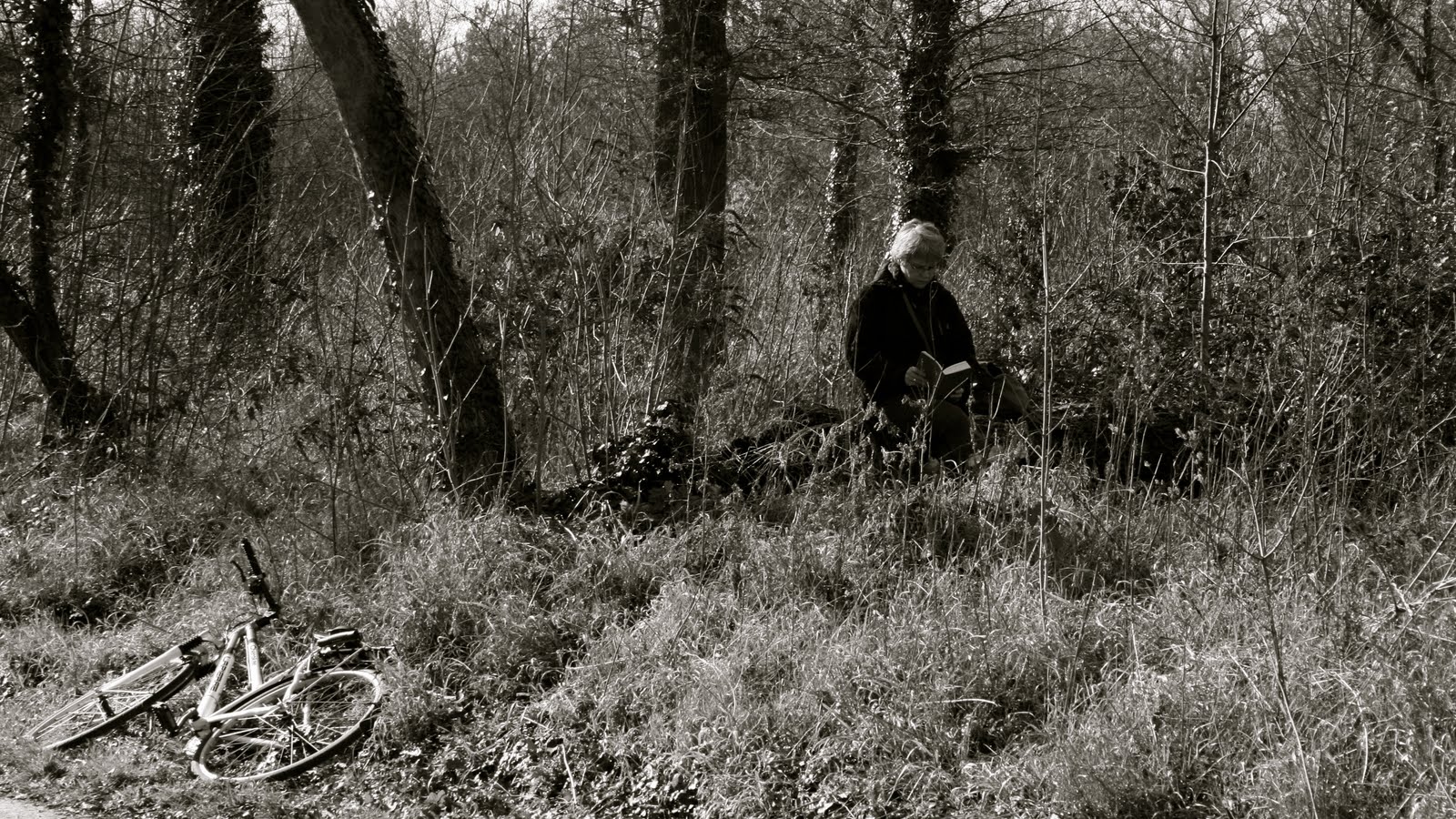
So next time you're in Paris, particularly if you happen to visit in the springtime, I recommend you take half a day out to explore one of these two pieces of paradise. Stroll along the lakeside promenades or hire a canoe; hire a bike and take advantage of the well constructed bike paths; or simply take a book, find a peaceful spot and read amongst some of the most beautiful landscapes in Europe.


Photos from my personal collection

For more information, see the following websites:

Tuesday, 31 May 2011

Marche aux Puces de Saint-Ouen, Paris

The flea markets of Saint-Ouen!
Located in the north of Paris, or as the Parisiens would say, outside of Paris, as it is located on the other side of Le Peripherique - the circular highway which encapsulates the city. This highway also acts as a type of barrier between 'Paris' and le bonlieu (the 'down-market' suburbs, as opposed to the upmarket arrondissements of Paris. Funny the word bonlieu - bon meaning good and lieu meaning place - the Parisiens who live within the confines of Le Peripherique certainly do not look upon the bonlieu as a good place - in recent years it has been the site of social disorder and unrest). Many visitors to Paris do not venture out to the 'other side', however, there are some interesting and beautiful things to see....The Marche aux Puces de Saint-Ouen is one of them (I should also mention the Bois de Vincennes and the Bois de Boulogne, which I hope to discuss in a future post). 


When you first exit the metro station at the Porte de Clignancourt and follow hoards of people you enter a crazy world of mad bargainers and store holders selling everything from handicrafts and CDs, imitation Louis Vuitton bags to clothing, used household appliances to books. As you walk by, people yell out to you 'Buy this, I'll give it to you for a good price' or 'Genuine leather jackets at only a fraction of the price you'd buy them in Le Bon Marche'. It's a bit chaotic, people everywhere, with French rap music playing in the background.....


But once you wade through this madness you enter a new world of beauty and serenity - the antique markets! Here classical music plays as you leisurely meander through the streets of amazing antique furniture and homewares. The images below cannot do it justice - the labyrinth streets seem to be endless and there are antique stores as far as the eye can see - I spent a good few hours strolling through these markets, stopping every now and then to admire the treasures (I find French antiques absolutely amazing, beautiful, breathtaking - there is an awe inspiriny store in Sydney called The County Trader http://www.thecountrytrader.com.au/ were I can get a regular fix without having to spend a few thousand dollars on an airfare to Paris.) However, being in Paris and seeing these amazing pieces, the feeling and the experience cannot be faithfully re-created in Sydney.


As the sun set behinds the buildings of Paris (I was here in February, so the days were incredibly short - it was dark by 4pm) and the day drew to a close, the store holders slowly packed up their wares - there is no rush for these people - I even came across a few of them sitting together having a chat over some hot coffee and pastries (true to form, the French love their pastries). 
Compared to prices in Australia, I found the antique markets quite reasonable. But even if you are not in the market to make a purchase or two (I would have loved to buy a few things, however the practicality of shipping it to Australia made me reconsider) it is a lovely way to spend a day in Paris.


Photos from my personal collection